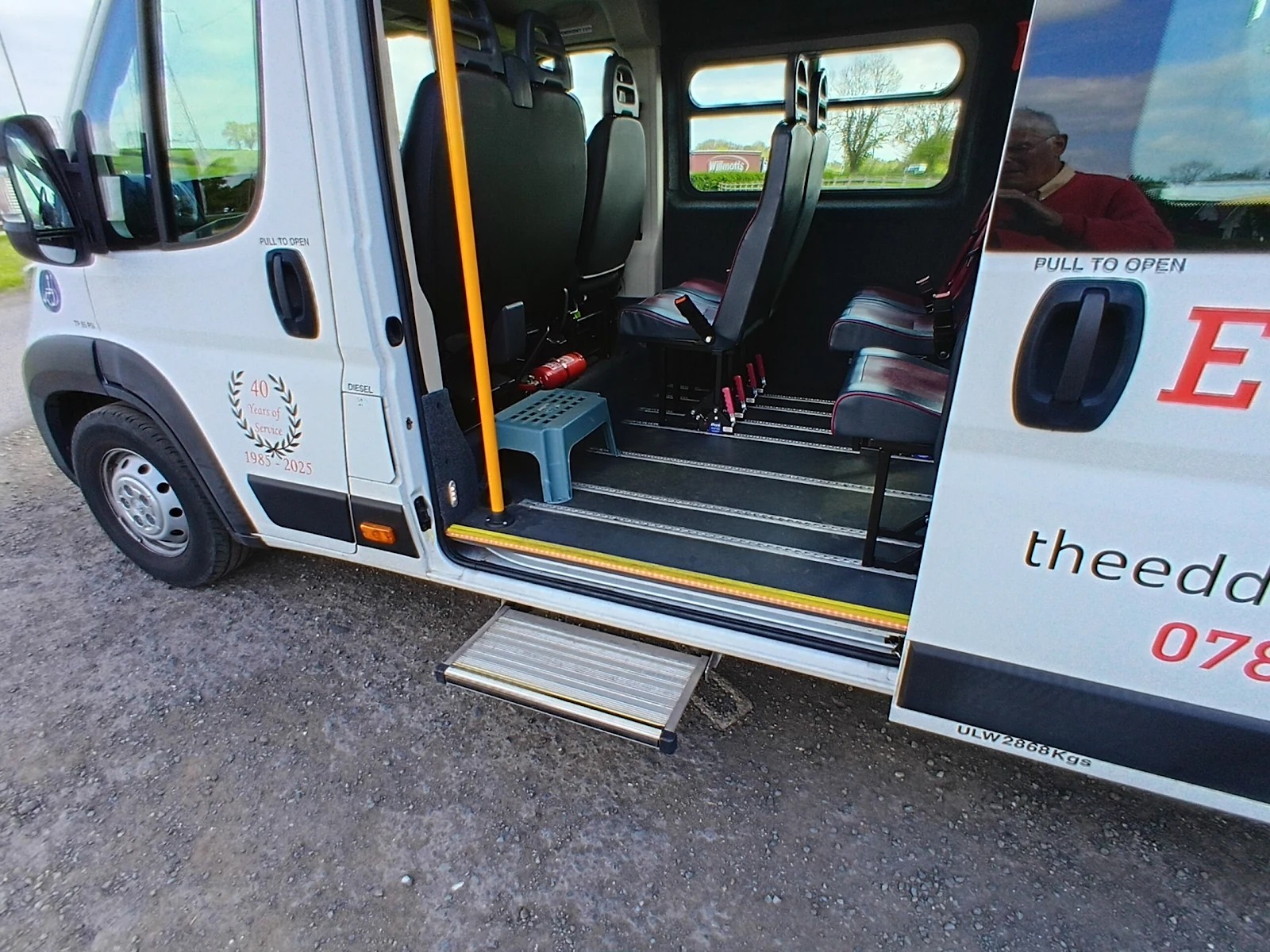
Standard seating
Maximum capacity
13 passengers
The bus has 11 passenger seats in the main body of the vehicle, plus 2 seats at the front with the driver.
Everyday Drives for the Disabled, Independent and Elderly
Policy
The EDDIE Bus is an accessible minibus that can carry able-bodied passengers, passengers who transfer from wheelchairs, static wheelchair users and, in some circumstances, powered wheelchair users.
The final decision about safe passenger numbers, wheelchair storage and seating arrangements is made by the driver.
Maximum capacity
13 passengers
The bus has 11 passenger seats in the main body of the vehicle, plus 2 seats at the front with the driver.
Maximum capacity
Up to 6 passengers who transfer from wheelchairs or walking aids, plus up to 7 able-bodied passengers.
Passengers who can transfer from a wheelchair or walking aid may be seated in the bus. Their wheelchairs are then folded and stored at the rear of the vehicle.
Passengers using walking supports are counted within the transfer passenger total.
Maximum capacity
Up to 3 static wheelchair users, plus additional passengers depending on the final seating arrangement.
A static wheelchair is one that remains occupied while the passenger is on the minibus.
Static wheelchairs must be secured to the floor of the bus, with appropriate wheelchair restraints and seat belts fitted by the driver. At least one seat needs to be removed for each static wheelchair and stored at the client’s pickup point.
In addition to static wheelchair users, up to 3 transfer passengers may also be accommodated, allowing for up to 7 additional able-bodied passengers.
Some passengers may be seated next to the window in a more restricted position. This may not be suitable for passengers who need more active support.
Maximum capacity
Usually 1 powered wheelchair user, plus additional passengers depending on the final seating arrangement.
In general, only one powered wheelchair can be accommodated because of loading and space constraints.
The powered wheelchair must be secured at the front and rear to the floor of the bus, with a seat belt fitted. Two seats need to be removed and stored at the pickup point.
In addition to the powered wheelchair user, up to 3 transfer passengers may also be accommodated, allowing for up to 7 additional able-bodied passengers.
If space permits, one static wheelchair may also be accommodated in addition to the powered wheelchair, but this is at the driver’s discretion.
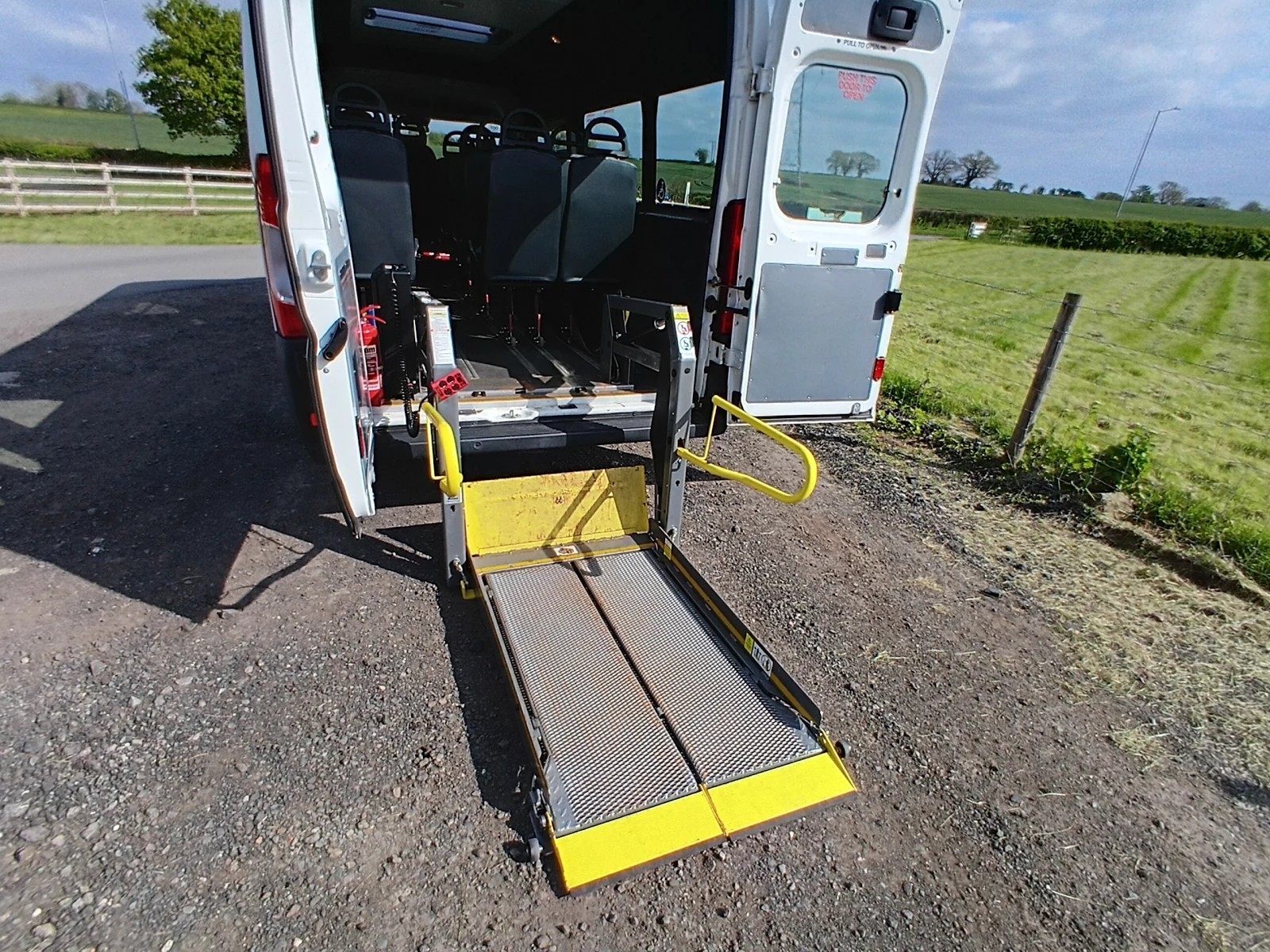
Tail lift access
The rear tail lift helps wheelchair users and passengers with limited mobility board the vehicle safely with support from carers and the driver.
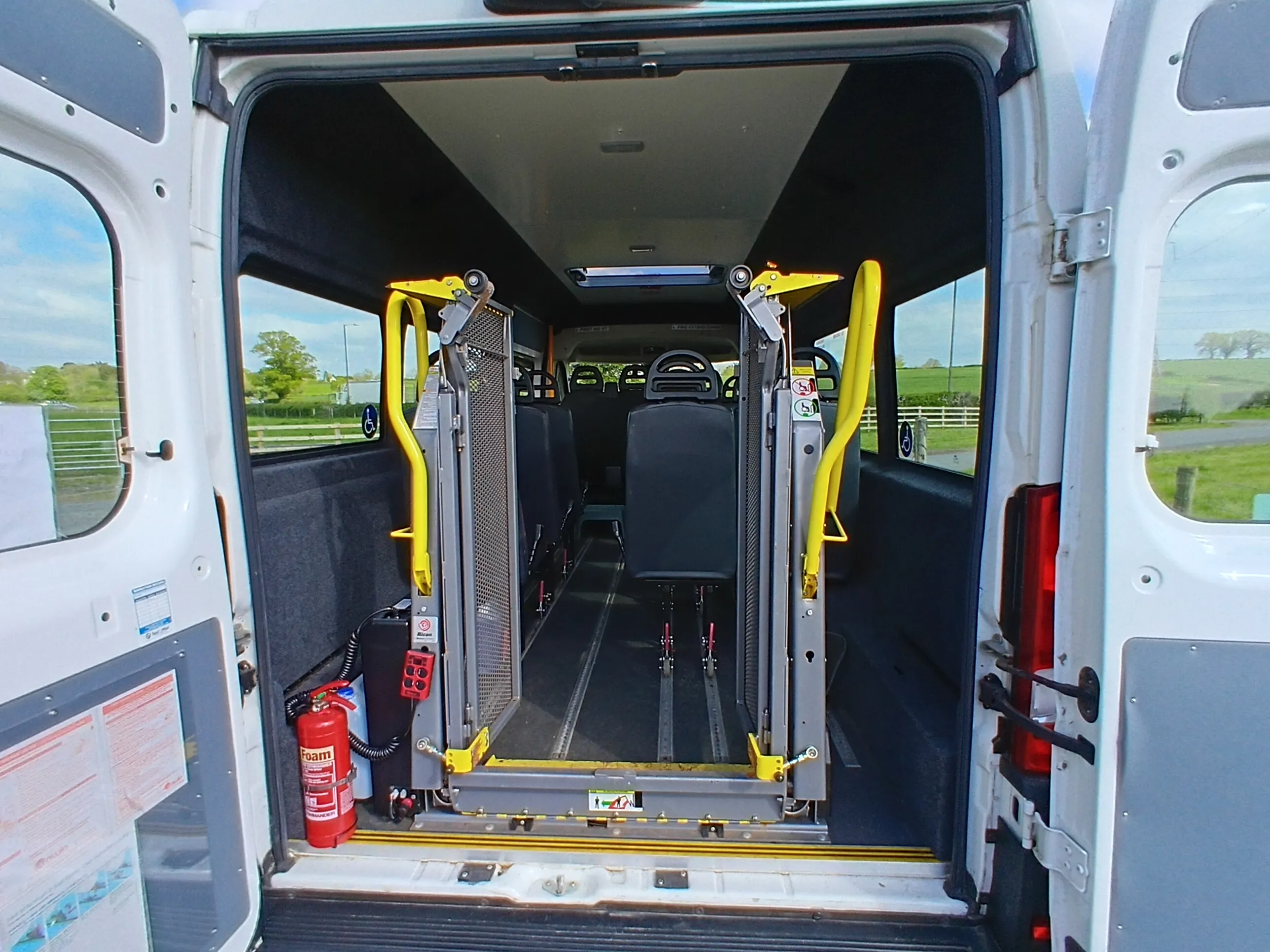
The driver is responsible for:
The driver is not responsible for transferring passengers to or from the lift, transferring passengers into or out of seats, providing personal care, or providing additional passenger support.
Carers are responsible for:
There should always be at least one carer with each group. Two carers are preferred where possible, especially where passengers need additional support.
All carers and support must be provided by the booking organisation.
Whether you are enquiring about transport for your group, interested in volunteering as a driver or helper, or would simply like to find out more, we would love to hear from you.
Since 1985, The EDDIE Bus has helped Bromsgrove residents get out and about safely as part of a group.